



Security is Prevention not Reaction
June 15, 2026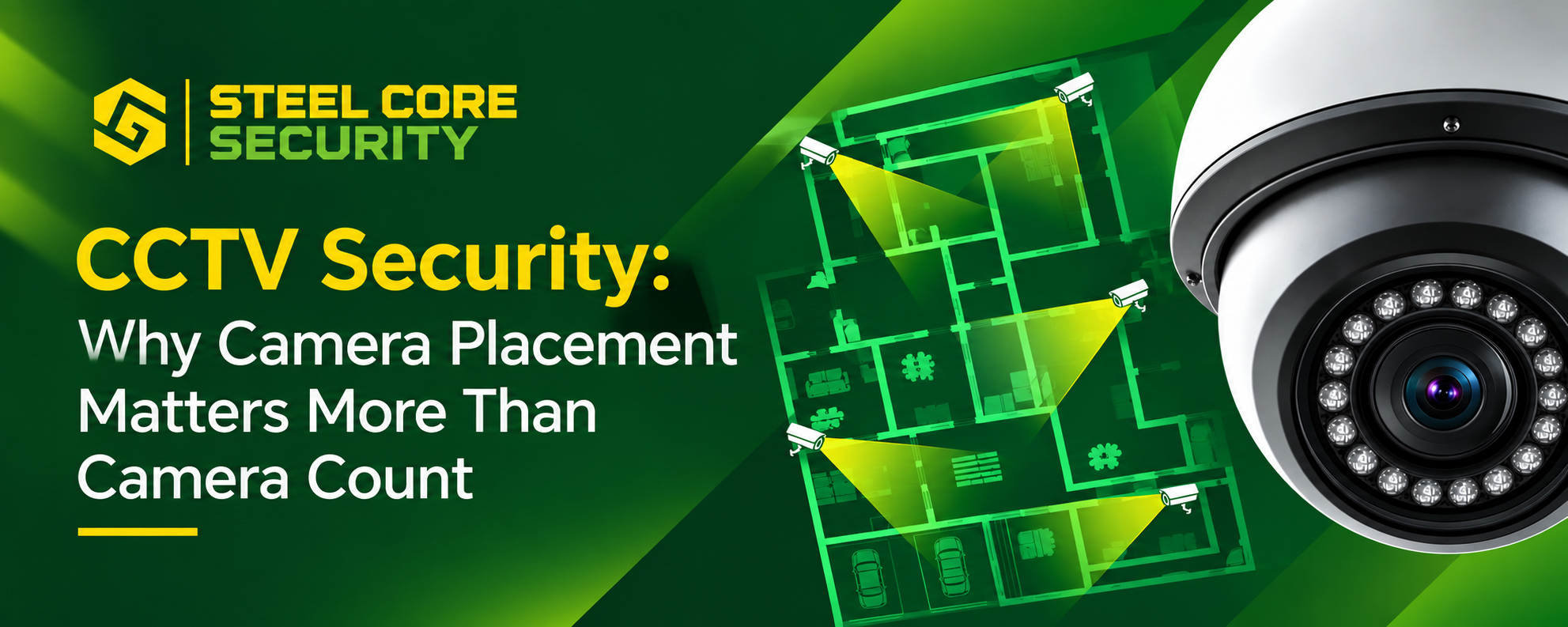
CCTV Security: Why Camera Placement Matters More Than Camera Count
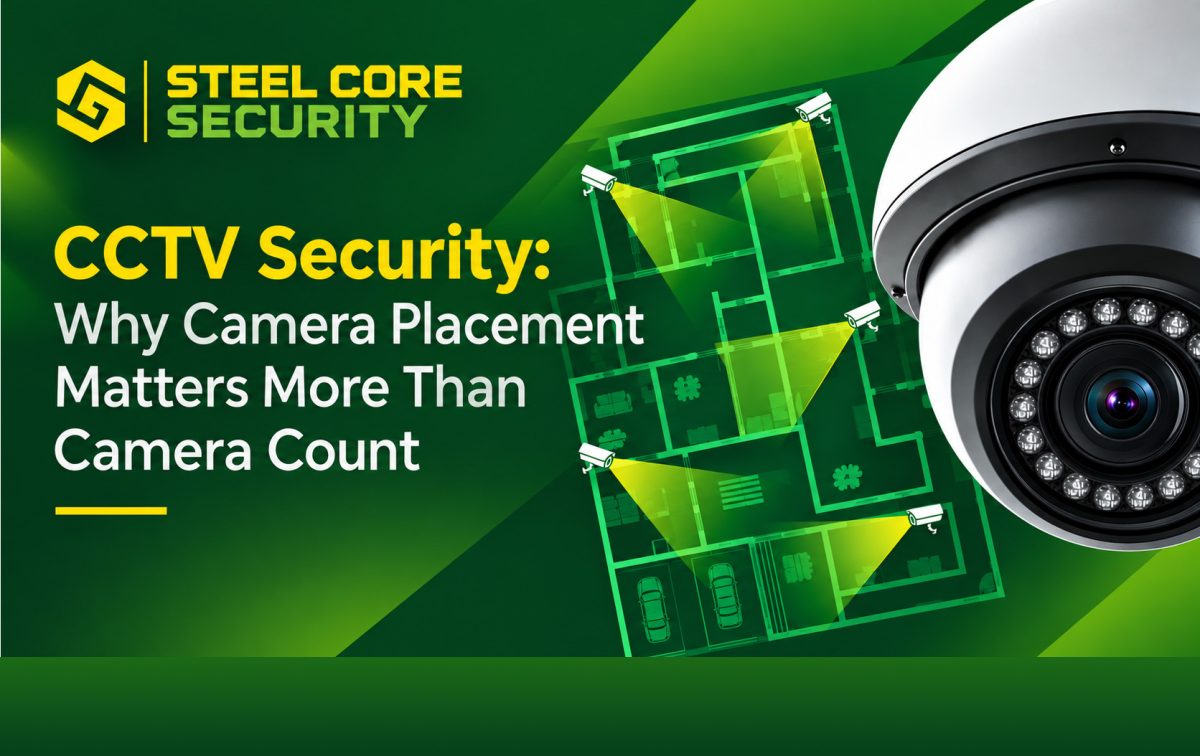
Having more cameras does not automatically create better security. An effective CCTV security system should provide meaningful visibility over areas that matter to the property's specific risk profile. Strategic camera placement, good lighting, appropriate angles and regular maintenance are often more important than simply increasing the number of cameras.
Start With the Purpose of Each Camera
Every camera should have a clear security purpose. Is it intended to monitor an entrance, parking area, perimeter, reception, stockroom, gate or another sensitive location?
A security assessment can help identify areas that require surveillance and determine the most appropriate camera positions. This prevents cameras from being installed in convenient locations that may leave important areas uncovered.
Camera Position and Lighting Matter
Camera height, viewing angle, distance and surrounding obstructions all affect image quality. Walls, trees, buildings and other structures can create blind spots or block important details.
Lighting is equally important. Poor lighting can make nighttime footage difficult to use, while excessive light or vehicle headlights can create glare. CCTV installation should therefore consider both daytime and nighttime conditions, with appropriate security lighting and low-light or infrared cameras where necessary.
CCTV Should Cover Critical Access Points
Entrances, exits and perimeter areas are often important parts of a CCTV security plan. Properly positioned cameras can help monitor people and vehicles entering or leaving a property while supporting access-control procedures.
For homes, businesses, schools, hotels, warehouses and institutions, surveillance can be strategically focused on areas where unauthorized access, theft or other security incidents are more likely to occur.
Recording Is Only Part of the Process
Recording footage is useful only if authorized personnel can access and review it when needed. Organizations should have a clear procedure for locating and preserving relevant footage following an incident.
CCTV systems should also be checked regularly. Cameras can become dirty, damaged, misaligned or disconnected, while recording equipment and network connections can develop faults. Routine maintenance helps identify these problems before they create security gaps.
CCTV Works Best as Part of Layered Security
CCTV should not operate as a standalone security solution. Cameras can observe and record activity, but trained security personnel, access control, alarm systems, security lighting and clear response procedures determine what happens next.
The objective is therefore not to place cameras everywhere. It is to create useful visibility, support informed security decisions and strengthen the other layers of protection.
For properties across Bungoma, Webuye, Kakamega, Busia and Western Kenya, a properly planned CCTV system can provide valuable support when it is designed around the property's actual security needs.
The right question is not simply "How many cameras do we need?" but "What do we need to see, where do we need to see it, and what will we do with that information?"

Welcome to WordPress. This is your first post. Edit or delete it, then start writing!